Neck & shoulders
Desk- and training-driven tightness through the upper traps and shoulder blade.
Dry needling uses thin filament needles to release tight muscle tissue and trigger points. At ONE Boulder Fitness, the resident Doctor of Physical Therapy (Atomic PT) uses it as one tool within a broader plan of hands-on therapy and exercise — on-site at 1800 Broadway.
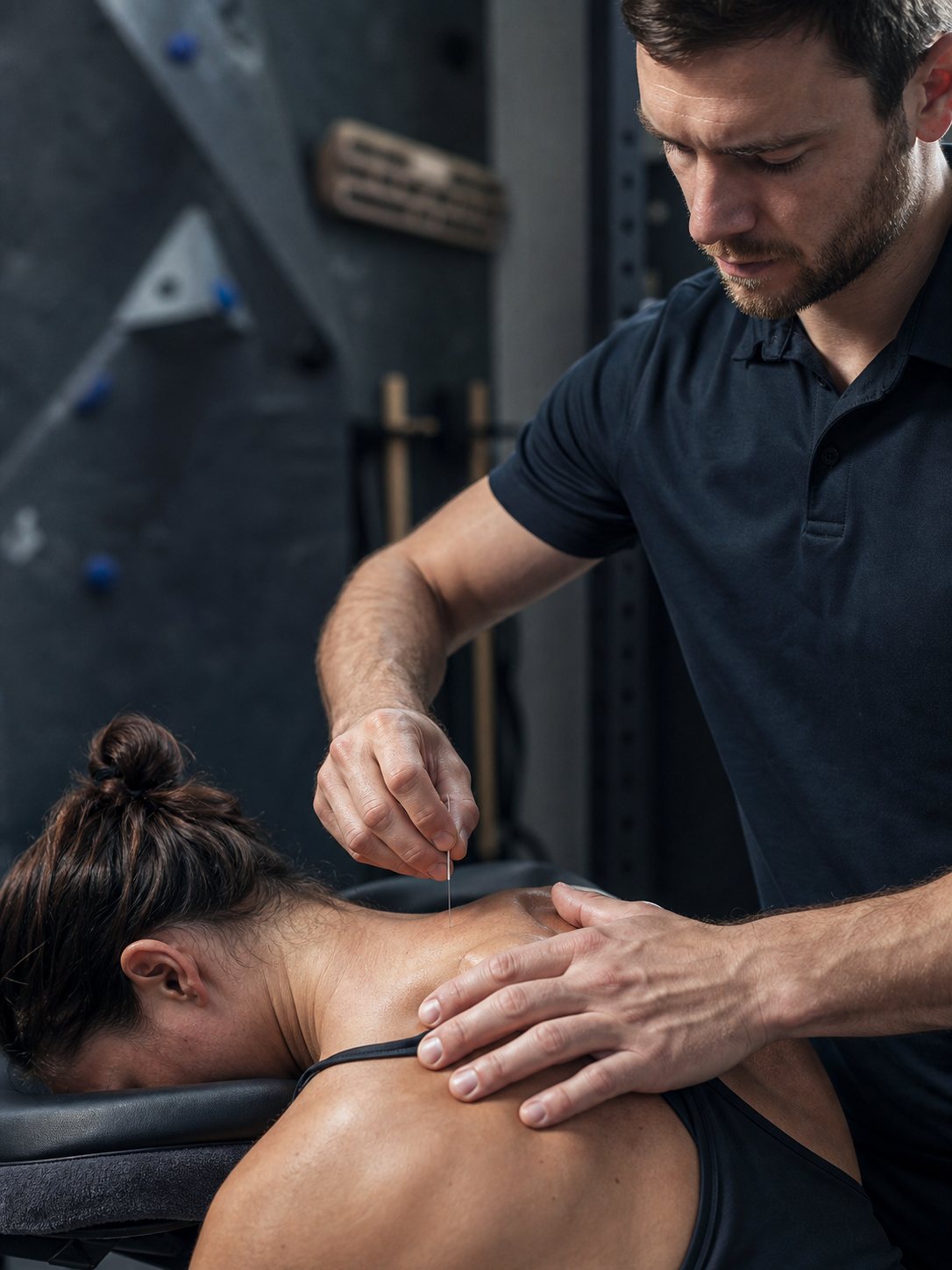 Dry needling treatment
Desk- and training-driven tightness through the upper traps and shoulder blade.
Glute and hip tightness that flares with sitting or heavy lifting.
Common in runners and cyclists logging repeat miles.
Chronic tight spots that build up from repetitive training load.
We identify the muscles and patterns causing your symptoms.
Thin needles into trigger points — most feel a quick twitch, then relief.
We follow with movement and strength so the release holds.
Dry needling at ONE Boulder Fitness is performed by Dr. Emma Stevenson, a Doctor of Physical Therapy who is Dry Needling Certified through Atomic Physical Therapy — not a quick add-on service, but a clinical technique built into your broader treatment plan.
It uses thin filament needles to release tight muscle and trigger points. Most people feel a brief twitch or ache, then relief — not the sharp pain of an injection.
No — dry needling is a Western, musculoskeletal technique used by physical therapists, distinct from traditional acupuncture.
No — the resident PT sees clients who aren’t gym members.
Yes — mild soreness for a day or two afterward is common and feels similar to post-workout soreness. It usually settles on its own; heat, water and gentle movement help.
It depends on the issue, but it’s typically used as one tool within a broader plan, not a standalone weekly habit. Your PT will space sessions around your training and recovery.
Request an appointment with the resident physical therapist.